
The rapid advancement of autonomous driving technology has brought significant changes to the transportation sector. With continuous progress in artificial intelligence, big data, and sensor technology, self-driving vehicles are no longer a distant dream. By 2025, autonomous taxis and buses have begun pilot operations in certain regions. These vehicles leverage high-precision mapping, LiDAR, cameras, and other sensors to perceive and analyze their surroundings in real time. They can navigate according to traffic conditions and regulations, autonomously completing journeys while significantly improving efficiency and safety on the roads.
But what if future travel included personal flight? The concept of flying cars has long captured the imagination, and with the rise of the electric and intelligent mobility era, their development is gaining momentum. Across the United States, Europe, and Asia, companies are racing to bring electric vertical takeoff and landing (eVTOL) aircraft—commonly referred to as flying cars or air taxis—into reality. These vehicles operate in a unique way: passengers first use conventional taxis or bicycles to reach designated transportation hubs, then board an eVTOL to travel through the air to a destination near another transit node, and finally complete their journey via last-mile transportation.
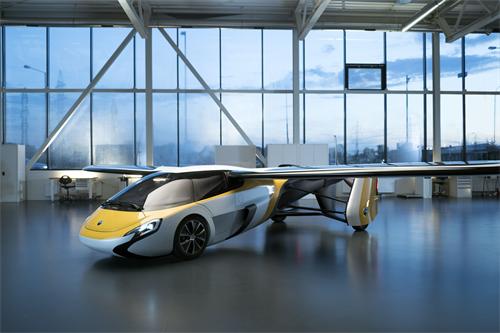
A prominent eVTOL design draws inspiration from helicopters, integrating automotive and flight control systems to enable continuous airborne travel. Another innovative approach separates the cabin from the propulsion system. The cabin focuses on passenger safety and comfort, while the propulsion system comprises two parts: a ground chassis similar to conventional cars, equipped with braking, driving, and transmission components, and an aerial propulsion system that attaches to the upper part of the cabin, enabling flight to another ground-based chassis.
Companies like Alef Aeronautics are pushing the boundaries of innovation, aiming to deliver the Model A flying car to customers by 2025 at a price of $300,000. If air travel becomes an integral part of future mobility, it could revolutionize transportation. According to JPMorgan, the eVTOL market could reach a staggering $1 trillion by 2040.
Currently, eVTOL aircraft are primarily undergoing testing in designated areas, but many manufacturers envision a commercial future for these vehicles. Potential applications include intra-city transportation, providing convenient urban travel solutions, as well as intercity travel, potentially serving as a complement or alternative to cars and trains.
Despite the excitement surrounding eVTOLs, significant challenges must be addressed before they become mainstream. Regulatory compliance and flight safety are top priorities, as air traffic management systems must be adapted to accommodate these new vehicles. Public acceptance and cost considerations are also critical factors—if people perceive eVTOLs as unsafe or prohibitively expensive, widespread adoption will face substantial hurdles.
Whether flying cars or robotaxis will dominate the future of transportation remains to be seen. However, what is clear is that 2025 marks a pivotal year for mobility innovation, with groundbreaking technologies set to reshape how we move within and between cities.
Recommend:

JDM vs. Euro Tuning: 2025’s Hottest Car Mod Trends from Tokyo to Berlin

Growth and Challenges of the Global Automotive Parts Manufacturing Market

The Rise of Hybrid Vehicles: Gaining Prominence in the Global New Energy Vehicle Market

New Trends in Car Buying: How Young Consumers Are Reshaping the Smart Vehicle Market
